

Description
10g Bromoethylazolam Powder *100% Pure
10g Bromoethylazolam Powder *100% Pure
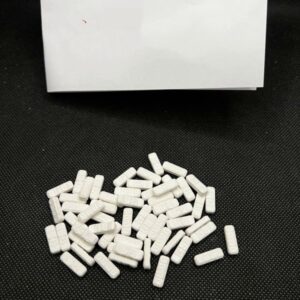
Equivalent to 166 bars for $80 at 6MG dosage!
————————————————- ——–
Bromoethylazolam (Educational Overview)
Bromoethylazolam is a synthetic compound belonging to the triazolobenzodiazepine class, a group of chemicals structurally related to benzodiazepines. Compounds in this category are typically associated with central nervous system depressant effects, including sedation, anxiolysis, muscle relaxation, and hypnotic properties.
Classification & Structure:
Bromoethylazolam is characterized by a triazolo ring fused to a benzodiazepine core, a structural feature shared by several high-potency benzodiazepine analogs. Modifications to this core structure can significantly alter potency, duration of action, and side-effect profiles when compared to traditional prescription benzodiazepines.
—————————————- ————————————
Guide on Making A Solution:
Dosing at 3mg/mL
At 3mg/mL, the solution is relatively stable and easier to maintain at standard room temperatures. This concentration is ideal for research requiring high precision with a lower risk of crashing.
1-Gram Master Formula:
Bromoethylazolam: 1.000g (1,000mg)
High-Proof Ethanol: 33mL
Propylene Glycol (PG): 300mL
Total Volume: 333mL
Preparation:
Combine the 1.000g of powder with 33mL of ethanol in an amber glass bottle and shake until a uniform slurry forms.
Add 300mL of PG.
Submerge the bottle in a water bath at 140F (60C) for 30 minutes.
Agitate vigorously until the solution is perfectly translucent.
Stability: This solution remains stable at temperatures above 60F. It requires a 30-second shake before each use to ensure homogeneity.
——————————————– ——————————–
Dosing at 6mg/mL
The 6mg/mL concentration represents a supersaturated state. This requires more aggressive thermal energy to achieve dissolution and much stricter environmental controls to prevent the solute from falling out of the solution.
1-Gram Master Formula:
Bromoethylazolam: 1.000g (1,000mg)
High-Proof Ethanol: 17mL
Propylene Glycol (PG): 150mL
Total Volume: 167mL
Preparation:
Powder Prep: Ensure the powder is finely ground with no visible clumps.
Solvent Intro: Add 17mL of ethanol to the powder first to wet the hydrophobic surface of the molecules. Shake for 2 minutes.
Thermal Cycle: Add 150mL of PG and submerge in a 150F (65C) water bath.
Agitation: Heat for 4560 minutes, removing the bottle every 10 minutes for high-intensity shaking.
Final Check: The solution must be checked against a bright light source for seed crystals or particulates. If any remain, the solution will fail and re-solidify as it cools.
Storage Warning: This concentration is highly volatile. It must be stored in a climate-controlled environment between 70F and 80F. If the bottle is placed on a cold surface or kept in a room below 65F, the bromoethylazolam will likely crystallize, requiring a full re-heating cycle to restore the 6mg/mL concentration.
—————————————— ———————————-
In chemical research, the difficulty of reaching higher concentrations like 6mg/mL isnt just a matter of more powder; its a battle against the physical laws of saturation and lattice energy.
Here is the scientific explanation for why bromoethylazolam becomes increasingly resistant as you move from 3mg to 6mg.
1. The Saturation Point and Solvent Fatigue
Every solvent has a maximum capacity for how many molecules of a specific solute it can hold at a given temperature.
At 3mg/mL: The Propylene Glycol molecules have plenty of space to surround and isolate each bromoethylazolam molecule.
At 6mg/mL: You are approaching the limit of solubility. The solvent becomes crowded. There are fewer free PG molecules available to keep the bromoethylazolam molecules apart. Because the molecules are packed so tightly, they are constantly trying to bump into each other and hook back together into a solid crystal.
2. High Lattice Energy vs. Solvent Pull
Bromoethylazolam is a dense, crystalline solid. The molecules are held together by strong internal bonds (lattice energy).
To dissolve it, the solvent must provide enough pull to break those internal bonds.
As the concentration increases, the pull of the solvent weakens because the liquid is already saturated with the drug. This is why you need increased thermal energy (150F) at 6mg; the heat provides the extra kinetic energy necessary to force the solvent to break those stubborn crystalline bonds.
3. The Seed Crystal Phenomenon (Nucleation)
At 6mg/mL, the solution exists in a metastable state. This means it is technically holding more than it wants to.
If a single microscopic grain of undissolved powder remains, it acts as a nucleation site.
The dissolved molecules, which are already looking for a reason to turn back into a solid, will rapidly attach to that grain. This can cause a chain reaction where your perfectly clear solution turns into a bottle of slushy crystals in a matter of minutes as it cools.
4. Viscosity and Mass Transfer
Propylene Glycol is thick (high viscosity). At higher concentrations, the mixture becomes even thicker.
This thickness slows down mass transferthe speed at which the powder spreads through the liquid.
In a 3mg solution, the liquid moves easily. In a 6mg solution, the liquid is so dense that the powder can get trapped in pockets of saturated PG, preventing the rest of the liquid from helping. This is why vigorous mechanical shaking is non-negotiable at higher doses.
Reviews
There are no reviews yet.